Johann Sebastian Bach
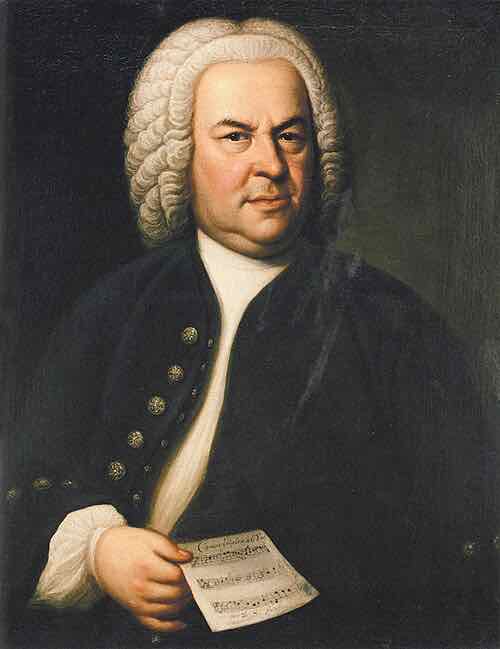
Imagine an intellect capable of mathematically proving the presence of the Creator in the Universe not through dry treatises, but through sound—making even convinced atheists freeze in sacred awe. Johann Sebastian Bach entered history not merely as a brilliant composer. He was a great Protestant theologian whose language was notes.
At a time when music was beginning to turn into refined entertainment for well-fed aristocrats in powdered wigs, this man raised an absolute spiritual revolt. He flatly refused to serve the vanity of the European elite.
For Bach, a musical score was an exact map of divine order. An orthodox Lutheran, he knew the Bible by heart and possessed his own vast theological library. His life was a continuous catastrophe: he buried his first wife and half of his children, constantly clashed with dull church officials who considered his music “too complex,” and by the end of his life he became completely blind. Yet, in his work there is not a single drop of hysteria or rebellion against Heaven. Bach took the chaos of this ruined, fallen world and, through the strictest polyphony and counterpoint, assembled it back into the ideal architecture of God’s design. Every manuscript of his—whether a grand mass or a simple keyboard exercise—he signed with the ironclad abbreviation “S.D.G.” — Soli Deo Gloria (“Glory to God alone”). Bach proved an unthinkable thing: a true genius never tries to steal glory from his Creator. He works like an ideal, transparent transmitter through which the mathematical and spiritual harmony of Heaven breaks into our earthly slaughterhouse.
Centuries later, philosophers will say: “If Bach’s music exists, then God exists.”
His fugues and chorales are not merely art; they are an acoustic Gospel that mercilessly tears the masks from a person and places them face to face with eternity. Bach did not write for kings; he wrote for the King of kings—and that is precisely why his notes outlived all empires…


